
 Accuracy matters
Mix preparation
Ingredients are weighed, dispersed and blended in a controlled sequence.
Follow the small-batch journey through formulation, mixing, pasteurisation, ageing, churning, inclusion, hardening and careful storage.
Explore the guide ↓Use these three perspectives to compare flavour, texture and the way each option fits a serving moment.
Accuracy mattersIngredients are weighed, dispersed and blended in a controlled sequence.
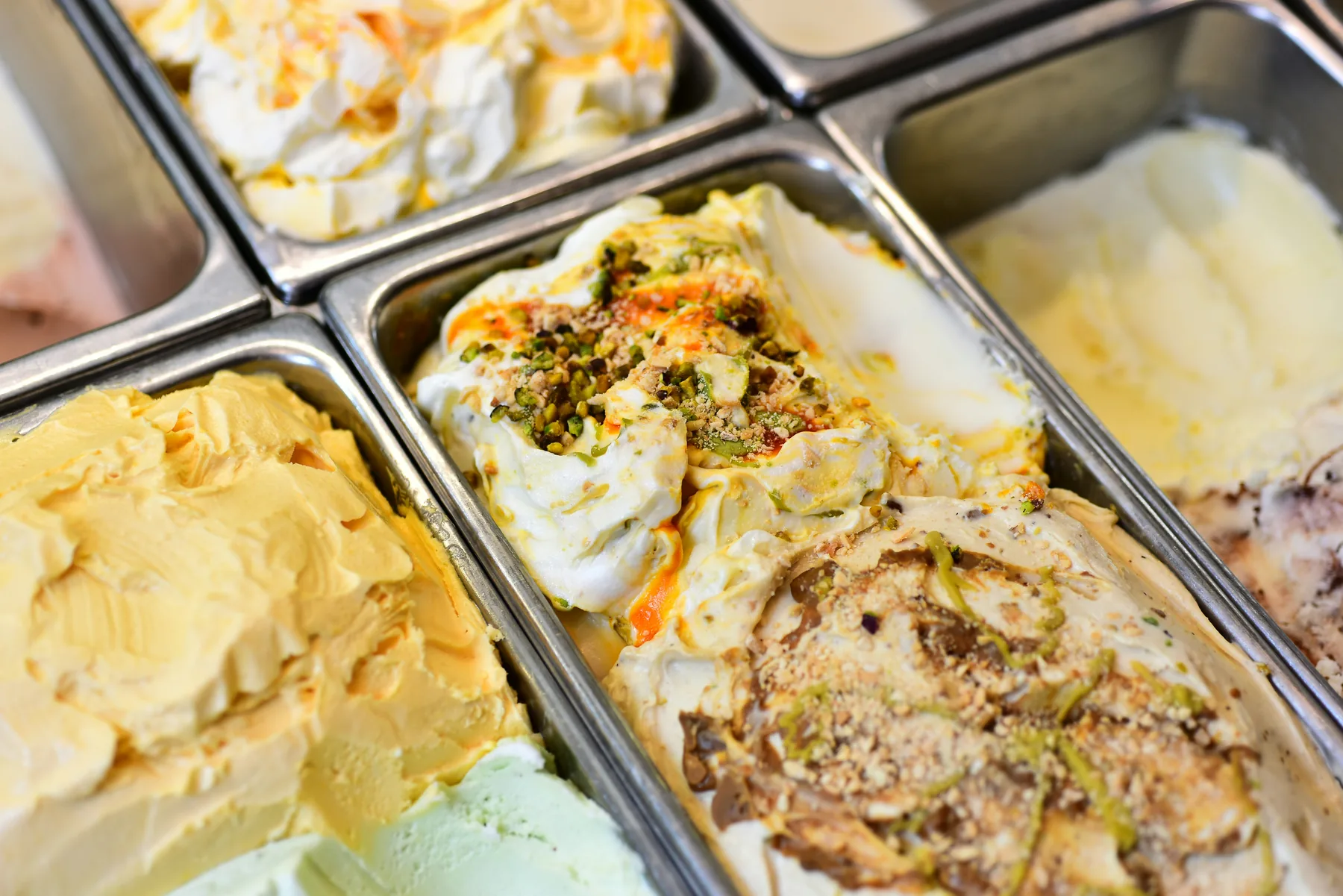 Texture is formed
The churn creates small ice crystals and incorporates air as the mix freezes.
 Smoothness is protected
The semi-frozen product is rapidly cooled to a stable storage condition.
Use this table as a starting point, then check current product information for the exact recipe and service context.
| Stage | Main purpose | Critical control | Quality result |
|---|---|---|---|
| Mixing | Uniform ingredient dispersion | Accurate weights and hydration | Consistent base |
| Heat treatment | Food safety and functionality | Time and temperature | Safe, stable mix |
| Churning | Freeze and aerate | Draw temperature and overrun | Fine texture |
| Hardening | Complete freezing rapidly | Cold air and product depth | Small crystals |
The liquid mix must be balanced, heat-treated where required, cooled and often aged before freezing. During churning, part of the water freezes while air is incorporated. Rapid hardening then limits ice-crystal growth and helps preserve a smooth texture.
Balance water, fat, protein, sugars, solids and flavour ingredients.
Apply the required heat process and create a uniform fat dispersion.
Rest the cold mix, then freeze while incorporating controlled air.
Freeze rapidly and maintain a stable cold chain.
“The customer sees a scoop. The kitchen sees a chain of decisions about water, air, fat, sugar, time and temperature.”— London Sam’s production team
A clear sequence makes tasting, serving or planning easier and more consistent.
Weigh and blend the recipe with full batch traceability.
Apply the appropriate pasteurisation and homogenisation process.
Cool rapidly and age the mix under refrigeration.
Churn, add inclusions, fill containers, harden and store frozen.
Product recipes and operating conditions can change. For allergies or specific dietary needs, request current information before ordering.
Overrun is the increase in volume caused by incorporated air. It affects density, texture and flavour delivery.
Cold ageing allows fat crystallisation and hydration of proteins and stabilisers, which can improve whipping and body.
Partial melting and refreezing encourage small crystals to grow into larger, coarser ones.
Pieces and ripples are usually added as the product leaves the freezer, before hardening.
Explore the flavours and notice how density, smoothness and inclusion size change the eating experience.
Ask about current availability →