
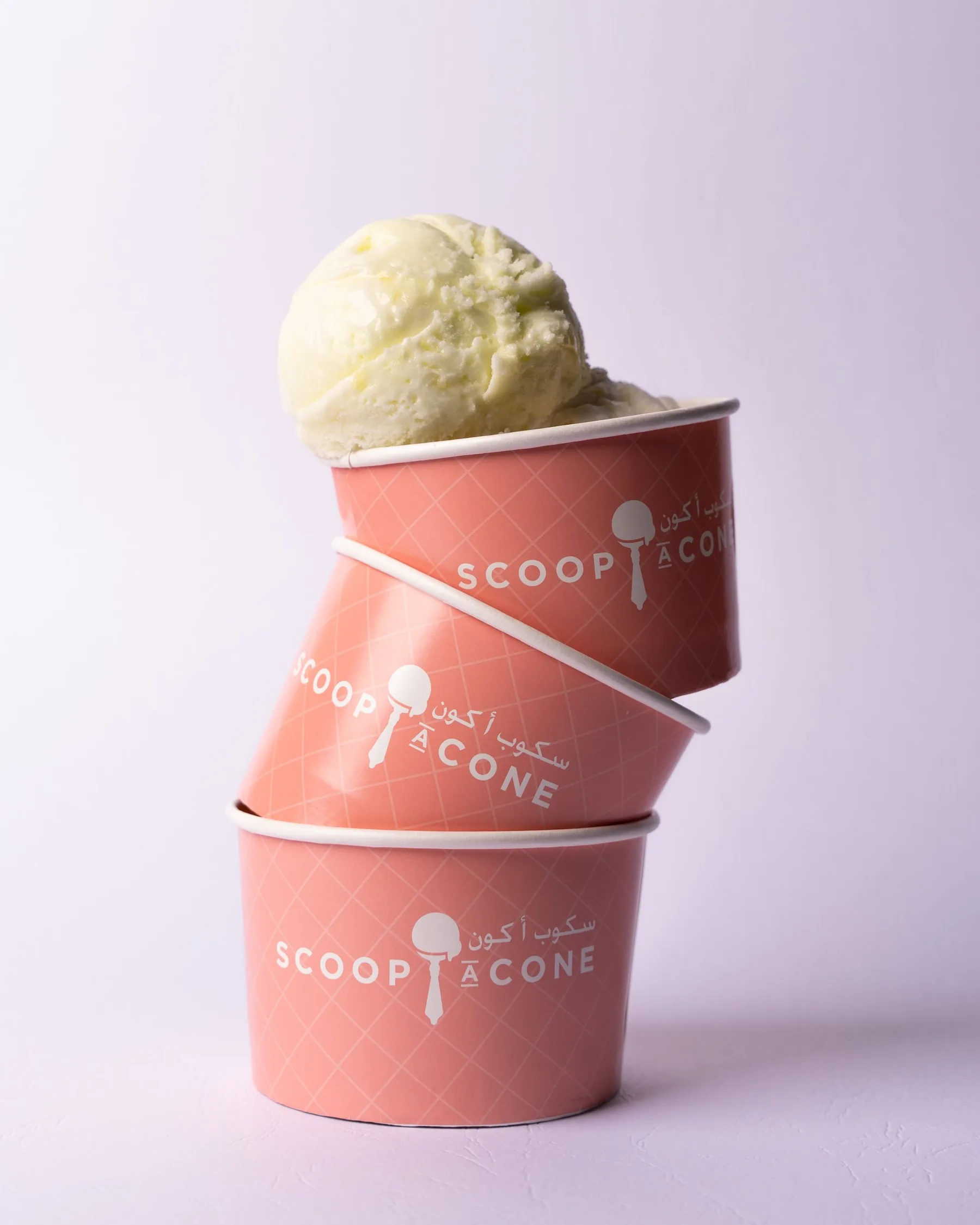
The gelato base itself may contain no obvious wheat, barley or rye, yet the full order can include cones, cookies, brownie pieces, wafers, malted ingredients or shared utensils. For people who need strict gluten avoidance, the key question is therefore not ‘is gelato gluten-free?’ but ‘what applies to this flavour, this topping, this cone and this service environment?’
Begin with the specific flavour
In practice, quality shows up in several small signals working together. Simple fruit, milk, chocolate or nut bases may be formulated without gluten-containing cereals, while flavours inspired by tiramisu, cookies, cheesecake or pastries can include obvious cereal ingredients. A plain pistachio may have a simpler gluten profile than pistachio with wafer crunch, even though the flavour name begins the same way. The useful clue is consistency between the name, the ingredients that create it and the sensory result, not conformity to a single fashionable rule.
Ask for allergen information for the named flavour rather than relying on the category. A display label or allergen matrix is more useful than a general assumption. Recipes change and seasonal specials can have different inclusions, so yesterday’s answer does not automatically apply to a new batch. No one cue is decisive on its own, so treat this as a pattern-recognition exercise rather than a pass-or-fail test. If a restriction is medical, move from general explanation to verified product information and appropriate professional guidance; tasting cannot answer a safety question.
The cone is a separate product
For a curious eater, the point is to turn technical detail into a better tasting decision. Conventional gelato cones and wafers commonly use wheat flour. A gluten-free scoop served in a standard cone is no longer a gluten-free order. A wrapped gluten-free cone kept separately provides different information from an unlabelled cone stored beside conventional wafers. The closer you look, the less useful binary labels become; several small pieces of evidence usually tell a better story than one dramatic cue.
If a gluten-free cone is offered, ask how it is stored and handled; otherwise a clean cup can simplify the order. For coeliac disease or medically necessary strict avoidance, cross-contact procedures matter as much as the ingredient recipe. That means asking specific questions, noticing sensory evidence and leaving room for variation between recipes and makers. This is also why London SAM avoids universal rankings: a sound explanation can travel between shops and seasons more reliably than a frozen leaderboard.
Shared scoops can change the risk picture
A British menu may use familiar words in slightly different ways from one shop to the next. Serving utensils may travel between tubs, and crumbs from biscuit-heavy flavours can fall into neighbouring pans. This is a practical cross-contact route in busy service. A pristine-looking vanilla pan can still sit beside a cookie flavour handled with the same scoop. The same principle also protects curiosity: understanding the mechanics should open more flavours to exploration, not reduce them to a scorecard.
Ask what procedures the shop uses—for example separate utensils, fresh scoops, clean gloves or opening a fresh container—when strict avoidance is required. No visual inspection can guarantee safety. Staff need accurate allergen information and realistic knowledge of their own process. Read descriptions as clues, then confirm anything that matters for allergy, intolerance or dietary choice directly with the food business. That approach keeps the decision practical: confirm what must be confirmed, observe what can be observed, and avoid certainty where the evidence is not available.
Know what a gluten-free claim is trying to communicate
The most helpful approach is proportionate: enough detail to make an informed choice, without pretending every recipe follows one universal formula. In UK food labelling, gluten-free is a controlled claim rather than a casual synonym for “no wheat added”. That makes verified wording more meaningful than informal reassurance. “Made without wheat ingredients” and “gluten-free” are not necessarily equivalent statements in a shared production context. That is why a careful tasting leaves room for variation between makers while still asking whether the finished product makes technical and culinary sense.
Prefer explicit product information and ask follow-up questions if the service format introduces cross-contact uncertainty. A shop may decide it cannot safely make a gluten-free assurance despite having recipes without gluten-containing ingredients; that caution can be a sign of responsible communication. Gelato is a craft category, so method, ingredients and service temperature can alter the result even when two products share the same flavour name. Use the information that is specific to the product in front of you, then let preference decide the rest when safety is not at stake.
Keep the order simple when information is limited
This topic becomes clearer when you separate taste preference from safety and nutrition questions. Complex toppings create more ingredient paths to verify. When the priority is reducing uncertainty, a known flavour in a cup with no garnish is easier to assess. A beautiful boutique counter can still have flour crumbs and shared utensils; visual polish is not an allergen-control system. This is especially useful at a busy counter, where a few precise observations can replace a long list of internet myths.
Choose simplicity deliberately, not as a punishment: a good lemon, chocolate or pistachio scoop can be a complete tasting experience. Dietary safety should not be inferred from artisanal appearance, price or a health-oriented brand identity. Process information is what matters. Those are related but different decisions, and each deserves the right evidence rather than a shortcut. Once the essentials are clear, enjoyment can return to the centre of the experience rather than being crowded out by label anxiety or technical jargon.
Use labels and menu language as a starting point. For allergies, intolerances or other health-related restrictions, verify the information that actually applies to the food in front of you.
What to take with you
The most useful lesson from this guide is not a rule to memorise but a method. Start with your purpose, identify the information that would change your decision, and then look for evidence that is specific to the product or situation. Gelato rewards attention: a clearer label can improve safety, a better question can reveal craftsmanship, and slower tasting can make a familiar flavour more interesting. London SAM treats those outcomes as complementary rather than competitive. Enjoyment is richer when the practical details are understood, while careful dietary choices do not have to remove curiosity from the experience.
Useful official reading
For safety, allergy or intolerance questions, these official UK sources are a better reference than social-media shorthand: